

Some might think that the week following the Australian Open lacks interest, or at least doesn’t carry the same allure as the Happy Slam. And yet, there’s plenty to talk about. Far more than one would expect.
Three WTA events, spread across Abu Dhabi, Ostrava and Cluj-Napoca, delivered genuinely high‑level tennis. In the Emirates, it was Czech player Sara Bejlek who stole the spotlight: starting from qualifying, she ended the week with the trophy in her hands after defeating second seed Ekaterina Alexandrova. Not bad for a 2006-born player who has only just turned twenty and reached her first WTA final.
In the Czech Republic, Katie Boulter claimed her fourth career WTA title and comfortably re‑entered the Top 100, with her sights set on climbing back towards the career‑high No.23 she reached in 2024. The United Kingdom could have celebrated a double, but Emma Raducanu was stopped 6–0 6–2 by Sorana Cirstea in Cluj-Napoca.
Beyond the intense WTA schedule, the weekend also featured Davis Cup action and the return of the ATP Tour with the 250 event in Montpellier. The Open Occitanie, aside from the striking TV visual impact of its colour palette, offered several points of interest. And this brings us to the focus of this edition of The BreakPoint Notes: the return of Arthur Fils, who stepped back onto the vivid courts of Montpellier after what felt like a sporting eternity.
The countdown finally stopped on 3 February 2026: 186 days since his last match, played at the Toronto Masters 1000 on 1 August 2025.
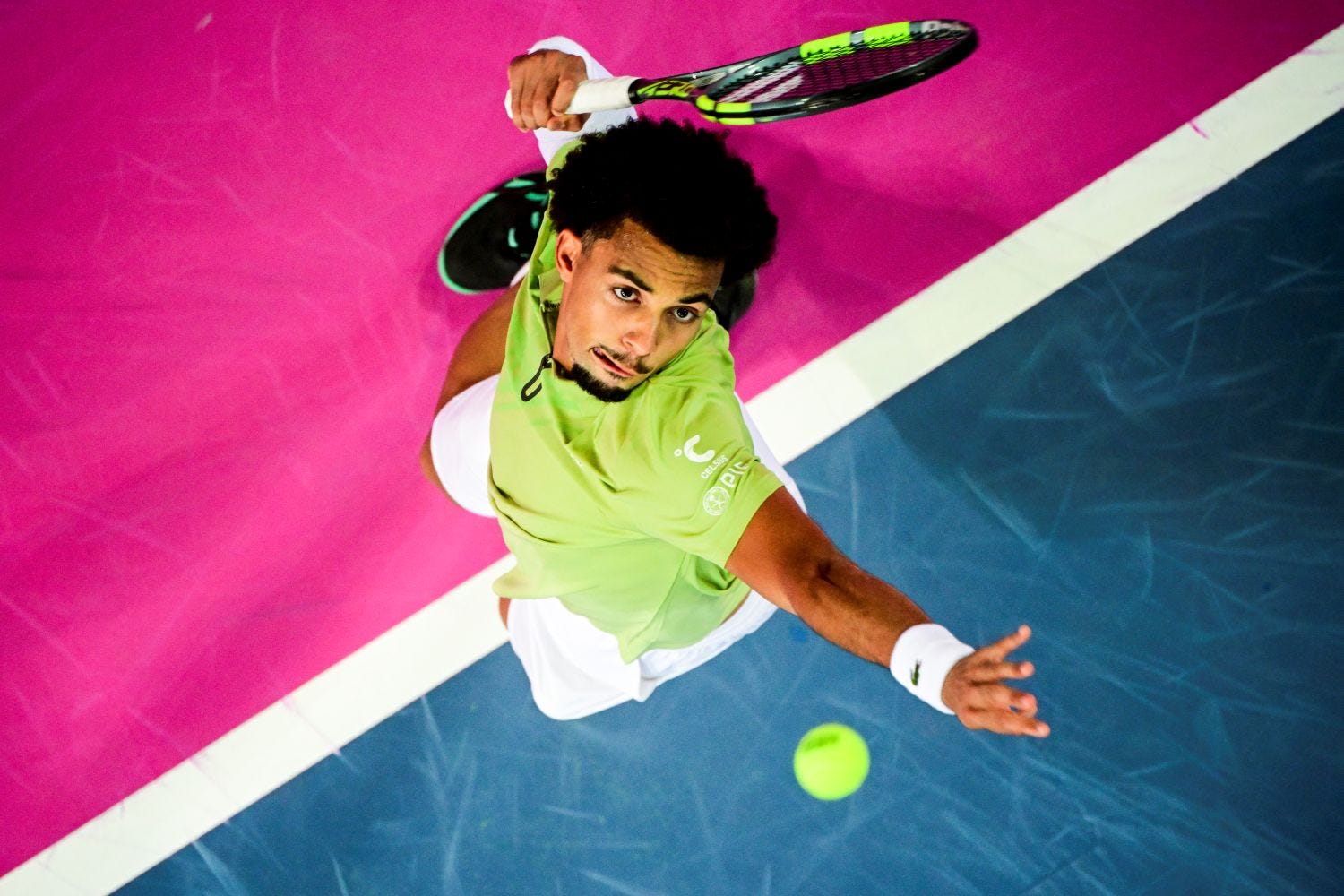
As he explained in his YouTube video “Renaissance”, the 21‑year‑old - current world No.42 -began experiencing back issues as early as Miami in mid‑March, during a match against Sascha Zverev. That was the start of a long ordeal. The pain resurfaced on the clay of Rome two months later, when the medical verdict arrived: stress fracture.
For any tennis player, and for a Frenchman in particular, you can imagine what it means to have Roland Garros looming. Fils wanted to play it, the risk seemed manageable, and he went ahead. But his second‑round match against Jaume Munar, on the atmospheric Suzanne Lenglen, became the turning point: the pain was unbearable, forcing him to his knees and requiring painkillers just to finish (and win) the match in five sets. But the damage was done, and he withdrew from the tournament.
Having dealt with a similar issue years earlier, the expectation was a couple of months out. Instead, the severity of the injury kept him sidelined far longer. He committed to physiotherapy, eventually receiving the long‑awaited “good to go” for Toronto, where he played singles and doubles, but the back still wasn’t ready. More rehabilitation was needed.
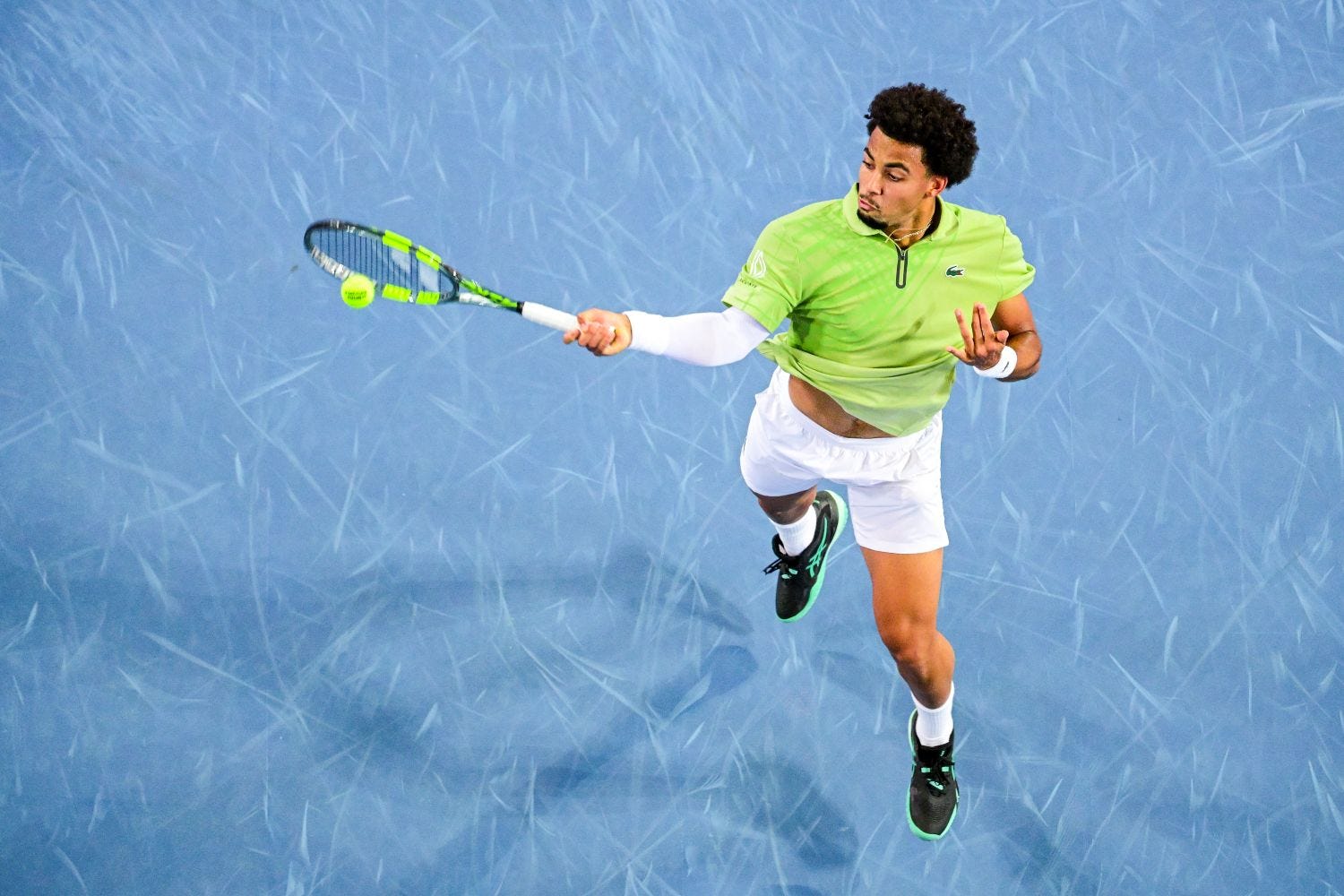
Yet difficult situations can create room for growth. During his recovery, he learned more about his body, reworked his movement patterns, adjusted his nutrition, and found ways to reduce the physical load and therefore the strain on his back. All done with patience and focus and long‑term perspective that only a 20‑year‑old can have.
His return was postponed until every piece was in place. Seeing him back in Montpellier, healthy and with his trademark competitive edge, suggests that the road ahead is long, but it’s the right one and the best is still to come. And it starts in the next few weeks, where will be in action in Rotterdam, Doha, Dubai and Indian Wells.