
Some stories are exceptional not only for what they tell, but for the way they continue to be written and rewritten by the very people at their centre. Some do not need explaining, only recognising. Elina Svitolina’s story in Rome is precisely one of those.
Twelve appearances at the Foro Italico, back-to-back titles in 2017 and 2018, both against Simona Halep, and now, once again, at the centre of the stage. Not as an echo of the past, but as a presence that is full, tangible, and current. Another significant win, this time against Coco Gauff, confirms that this comeback is anything but symbolic.
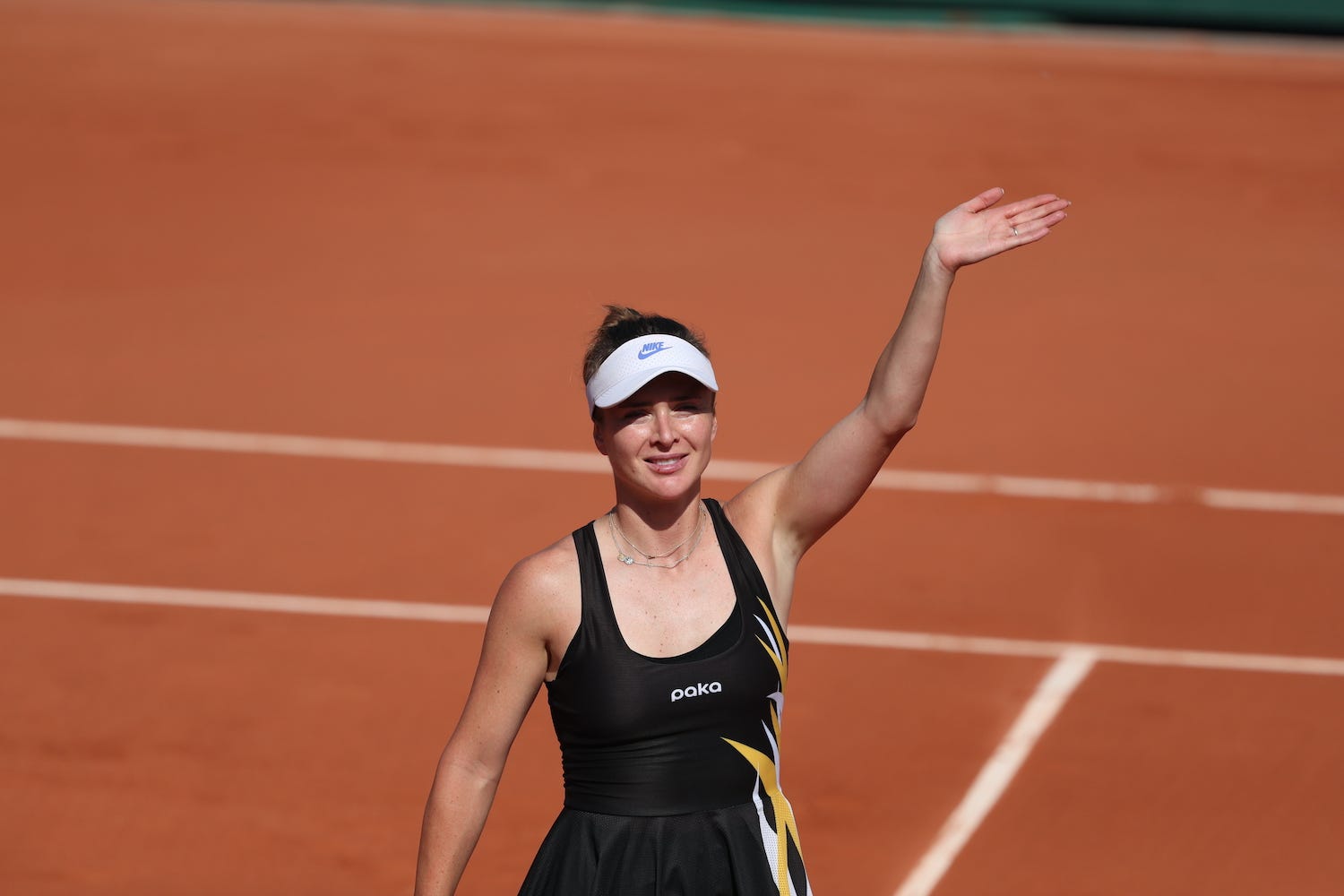
What is taking shape is one of the most meaningful weeks of her second career. Svitolina has put together numbers that go well beyond the idea of a “good run”: wins over world No.2 Elena Rybakina and No.3 Iga Świątek, a positive record against Top 10 players, and above all a clear impression, that of a player who has returned to managing moments before even managing rallies.
This is where the difference lies. Because while modern tennis often revolves around pace and power, Svitolina continues to operate in that invisible space between one shot and the next: reading the game, shaping the court, applying discipline. To that, she has now added outstanding physical condition and a more aggressive edge to her play, making her an even more complete competitor.
There is also a subtler, yet equally telling element. By winning the title after defeating another Top 5 player, she has become the oldest player to achieve this at a single WTA 1000 event, surpassing a benchmark set by Serena Williams (Miami 2013).
And then there is clay. Eight of her twenty titles have come on this surface, with a statistic that says more than any analysis: eight finals, eight victories. The most recent before Rome came in Rouen in 2025. When she reaches the final, Svitolina rarely leaves room for anyone else.
Paris could be the stage for something very special.
⸻
And this time, Rome does not tell just one story. It tells two.
On the men’s side, the signature belongs to Jannik Sinner, who defeats Casper Ruud for the fifth time in his career and closes a circle that in Italy had remained open for fifty years, since the days of Adriano Panatta in 1976.
The Rome title is a story within the story. Or perhaps, more simply, it is the match that creates the story itself. With 29 consecutive wins, Sinner becomes only the second player in history to complete the full set of all nine Masters 1000 titles, an achievement previously reached only by Novak Djokovic in 2018, at the age of 31.
And there is more. His name now sits alongside that of Rafael Nadal (2010 version): the only other player to have won all three clay-court Masters 1000 events in the same season.
The numbers continue to layer: 34 consecutive wins at Masters 1000 level, an ongoing streak, six consecutive titles in the category. Statistics are there to provide measure; records are there to be broken. Sinner, right now, is doing both. And the sense is that he is far from finished.
Here too, Paris may well be the place where another page of history is written.
⸻
The End
We will not anticipate anything for Roland Garros. Just one note: a special edition of The BreakPoint Notes will arrive after the draw. And that is where we will begin to understand what truly lies ahead. Thanks for reading, enjoy Tennis.
Very well, written. It captures the excitement of tennis at the moment.