
Learn, execute, refine, execute again, improve, win, repeat, win again.
That, perhaps more than anything else, sums up Jannik Sinner’s journey through this year’s Championships. His second Wimbledon title wasn’t simply another major added to his collection. It felt different. Twelve months ago he looked as though he had fire beneath his feet, gliding effortlessly across the lawns of the All England Club. This year, instead, he had to navigate a tournament that never seemed entirely under his control. He opened with a five-set battle, progressed without ever giving the impression of playing flawless tennis – particularly off the forehand side, while his serve and backhand remained a joy to watch – and arrived at the business end carrying a few more questions than many would have expected.
Yet this is precisely where Sinner continues to separate himself from everyone else. His greatest quality isn’t perfection. It’s his remarkable normality when the stakes are at their highest. Against Novak Djokovic, seven-time Wimbledon champion, he calmly produced three consecutive 6-4 sets. Against Alexander Zverev, who arguably played the finest grass-court tennis of his career for a set and a half, he quietly dismantled the match piece by piece. It wasn’t about overpowering his opponent but about taking options away from him. Lobs, net approaches, changes of pace and, once his forehand finally settled, a tactical display that slowly but relentlessly tightened around the German until there was nowhere left to escape.
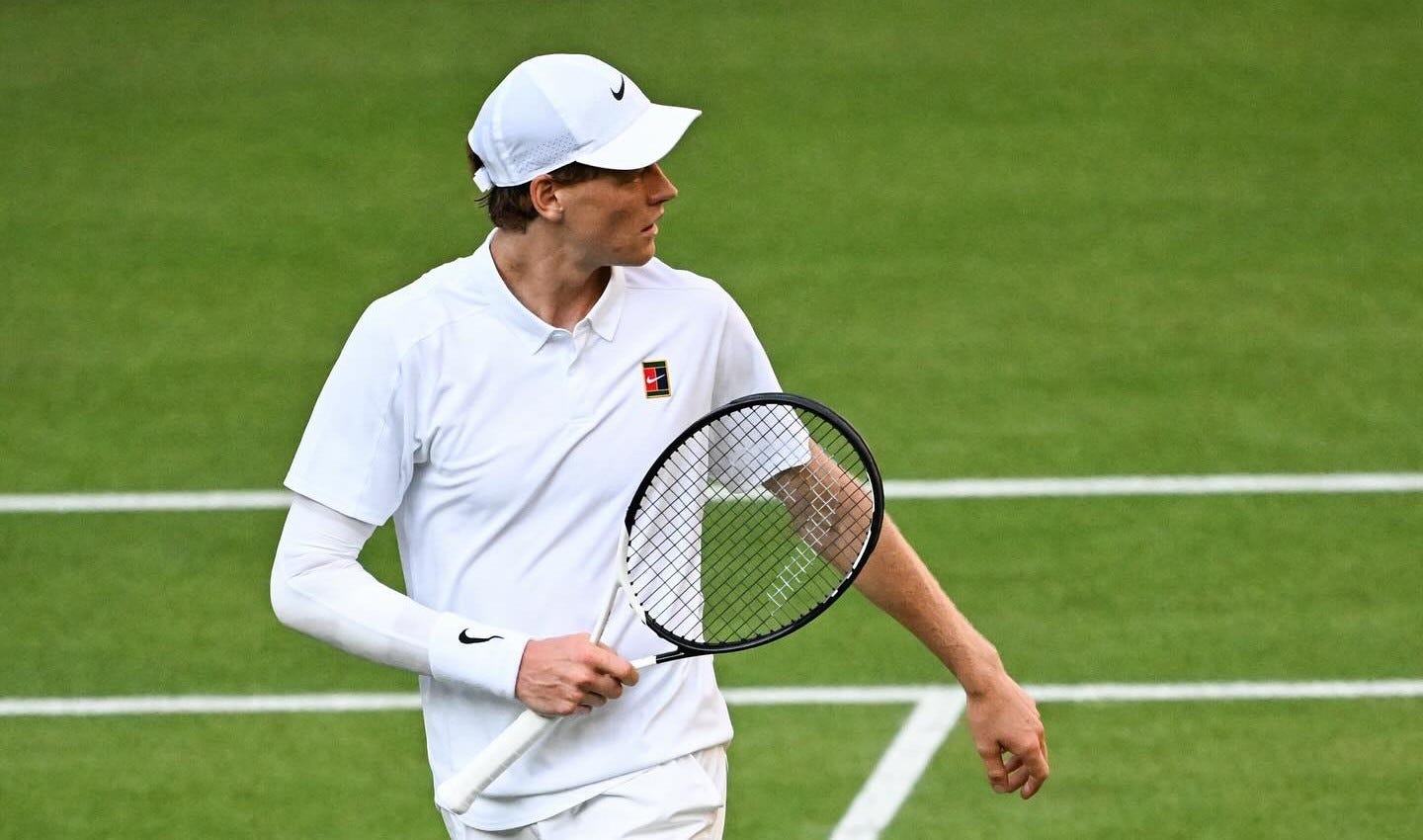
The reality is that Sinner was never truly on the verge of collapse throughout the fortnight. There were moments of uncertainty, certainly, but never the feeling that the tournament was slipping away from him. That is what makes defending a Grand Slam title so satisfying. As his coach Simone Vagnozzi says, winning is difficult; doing it again is even harder. Wimbledon 2026 offered another reminder of exactly why.
Now the focus inevitably shifts. After a summer dominated by Grand Slams, attention returns to the ATP Masters 1000 events, where an extraordinary challenge quietly waits in the background. Winning all nine Masters titles remains one of the few achievements still missing from Sinner’s résumé. Neither he nor his team will publicly admit that it has become a target, but it is difficult to imagine that the thought hasn’t crossed their minds. And, given the level he continues to produce, why shouldn’t it?
On the women’s side, Linda Noskova deserves every bit of the praise she has received. Mixing emotion with fearless ball-striking, the young Czech took control of an all-Czech final against Karolina Macharova to lift her maiden Grand Slam trophy. If you haven’t watched the final yet, it is well worth your time. And if you only have a few minutes, skip ahead to 5-2 in the second set. From that moment onwards, it becomes something rather special.
As another Wimbledon comes to a close - Wimbledone, as they said -, a couple of questions remain unanswered. The first concerns Serena Williams, whose long-awaited return lasted just one singles match before injury forced her to withdraw from the doubles. The second inevitably revolves around Novak Djokovic. If a 25th Grand Slam title is still to come, where will his next genuine opportunity be?
Emma Raducanu’s and Jack Draper’s withdrawals initially left British fans disappointed, but Arthur Fery’s unexpected run quickly gave the home crowd another story to embrace. Everything else felt comfortingly familiar. The Pimm’s, the champagne flowing around Centre Court, the unmistakable scent of freshly cut grass, the elegance of the crowd dressed in white and green, and, naturally, strawberries and cream enjoyed on Henman Hill. Some sporting events can be explained. Wimbledon still belongs to the select few that simply have to be experienced.